Decision 01
One action, not a menu
Multiple departure options felt helpful in testing, but caused hesitation. A single "Leave now" CTA reduced decision time — commuters want to be right, not to choose.
Decision 02
Watch handles the moment of truth
The highest-friction moment — about to board, hands full — is when a phone is hardest to use. Routing core interactions to the watch wasn't a nice-to-have — it was the whole point.
Decision 03
Suppress delay info until it changes the decision
Showing real-time delay data constantly created anxiety. The system only surfaces delay updates when they actually change what the user should do next.
Decision 04
Auto top-up as default, not opt-in
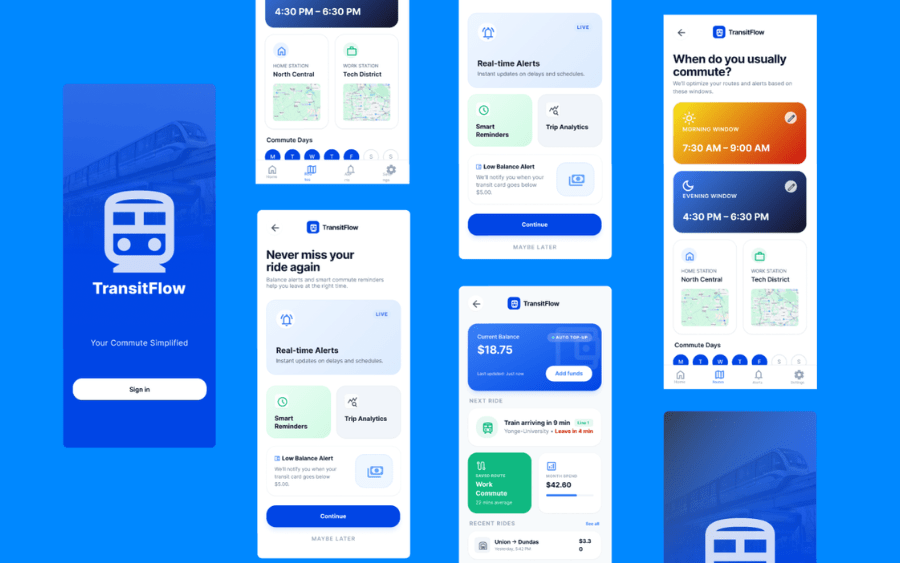
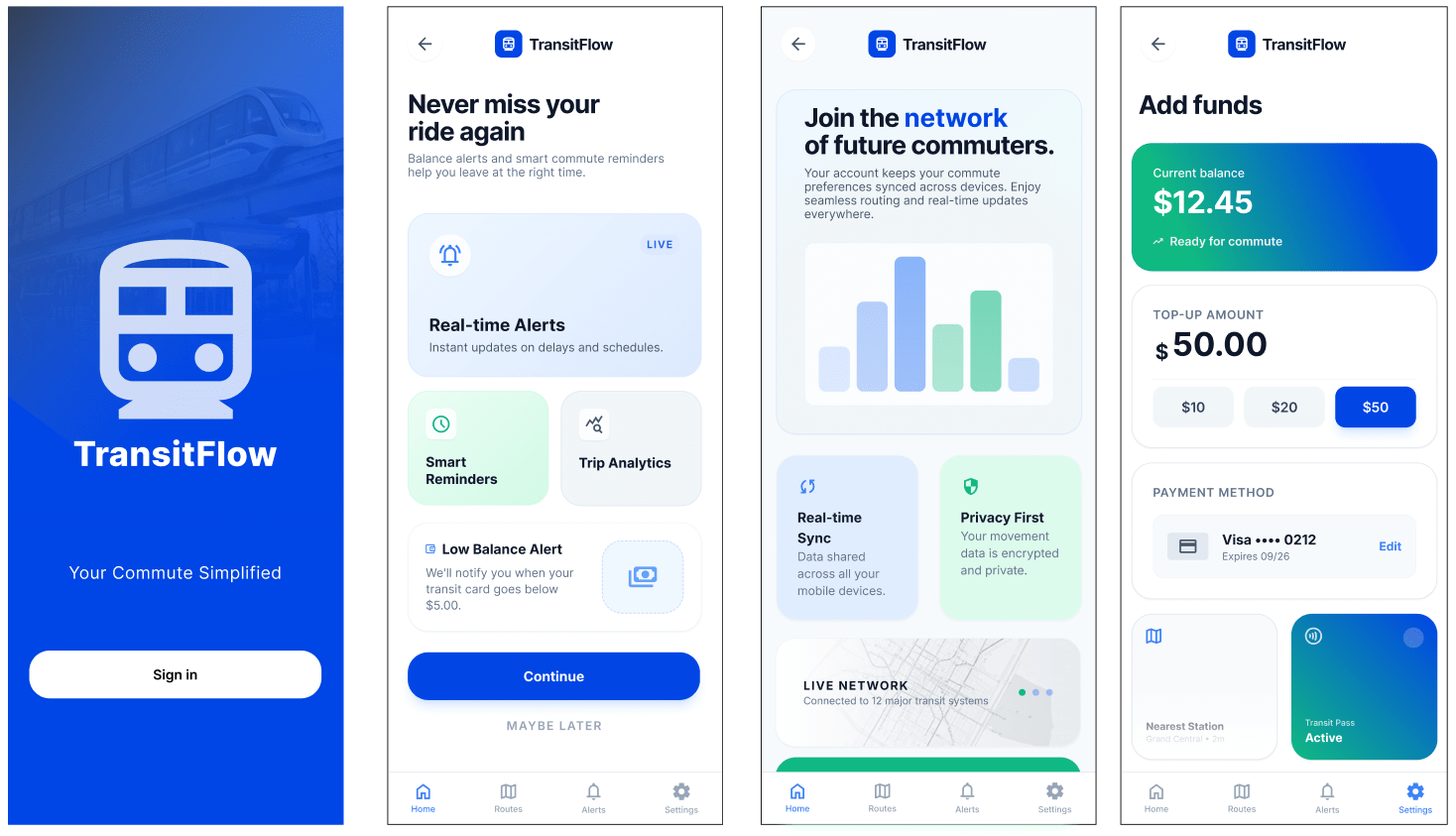
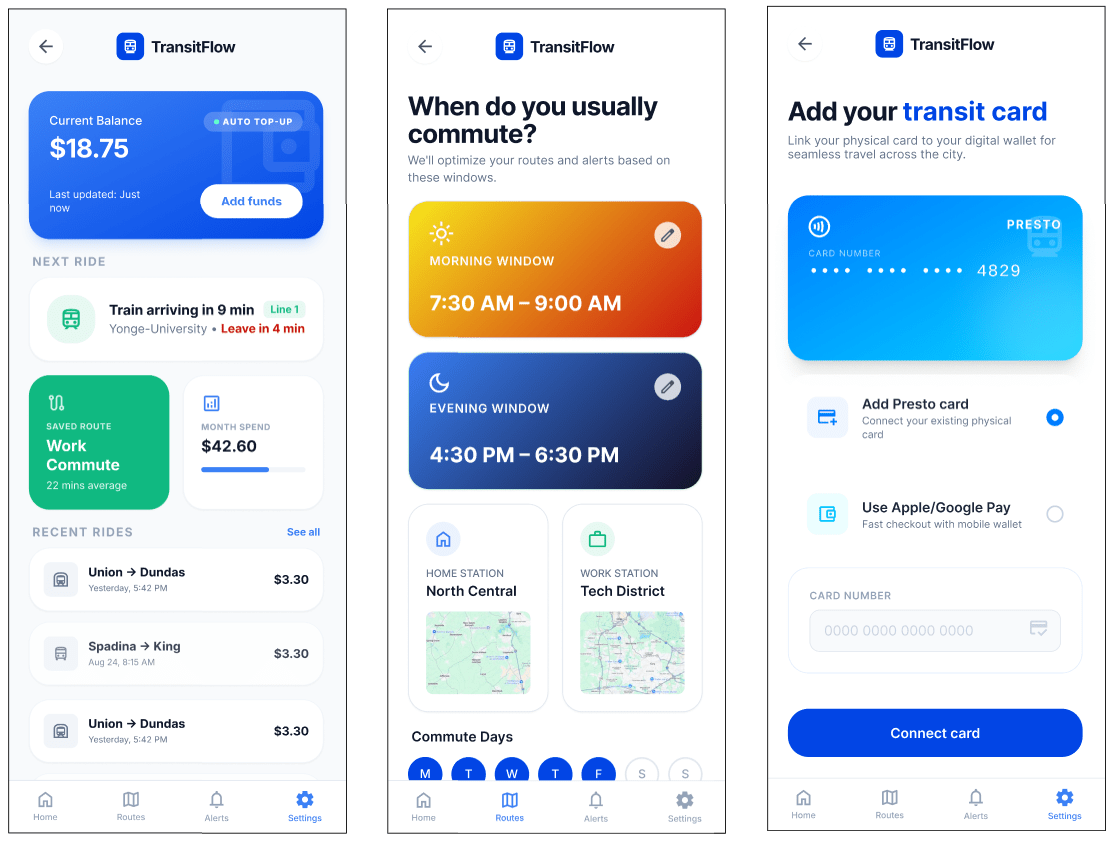
Requiring users to "enable" auto top-up meant most wouldn't. Payment anxiety was universal — making auto top-up the default (with easy opt-out) was the right call.
Decision 05
Progressive disclosure over dashboard
Every screen shows only what the user needs at that moment. The "full" UI is only ever revealed if deliberately sought — busy mornings demand simplicity, not feature completeness.
Decision 06
Tiered alert escalation
A single notification is easy to ignore. A tiered system — ambient → haptic → urgent — mirrors how real urgency builds and aligns with how people respond to approaching deadlines.